Payrolls grew by 263k, 8k more than expected and the two prior months were revised up by a combined 11k. The private sector added 288k and thus the government shed workers, mostly in education (seasonally adjustments). The household survey added a similar amount of jobs, 204k but when combined with a drop in the labor force of 57k (after the huge 786k jump in August), the U3 unemployment rate fell two tenths to 3.5%, matching again the pre covid low. The all-encompassing U6 rate fell 3 tenths to 6.7% after rising by a like amount last month.
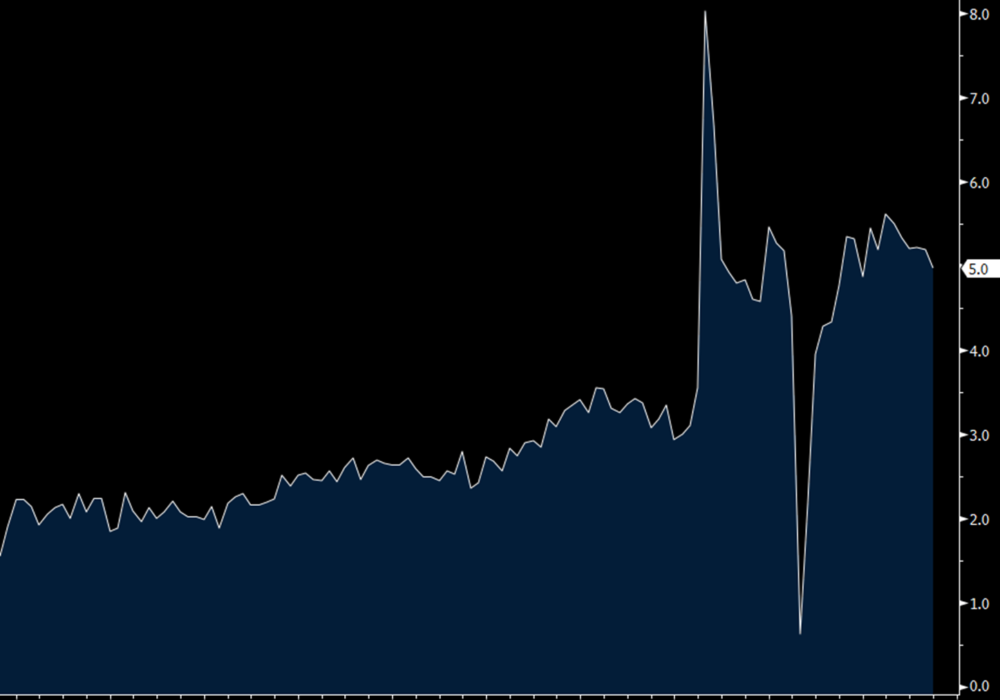
Hours worked were as expected at 34.5 and wages were also as anticipated, with average hourly earnings up .3% m/o/m and 5% y/o/y. This latter figure has had a 5 handle for the 9th straight month but has been steady for the last 6 months. Combining the two has average weekly earnings at 4.1%. Leisure and hospitality again led the way with an .8% m/o/m hourly wage increase and 5.4% y/o/y as did ‘transportation and warehousing’ with a .7% m/o/m and 6.3% y/o/y increases. The participation rate fell one tenth to 62.3% after rising by 3 tenths last month. The important 25-54 grouping saw its participation rate also tick down by one tenth to 82.7% but after jumping by 4 tenths in August. It was at 83% in February 2020. The employment to population ratio was unchanged at 60.1% which compares with the February 2020 print of 61.2%.
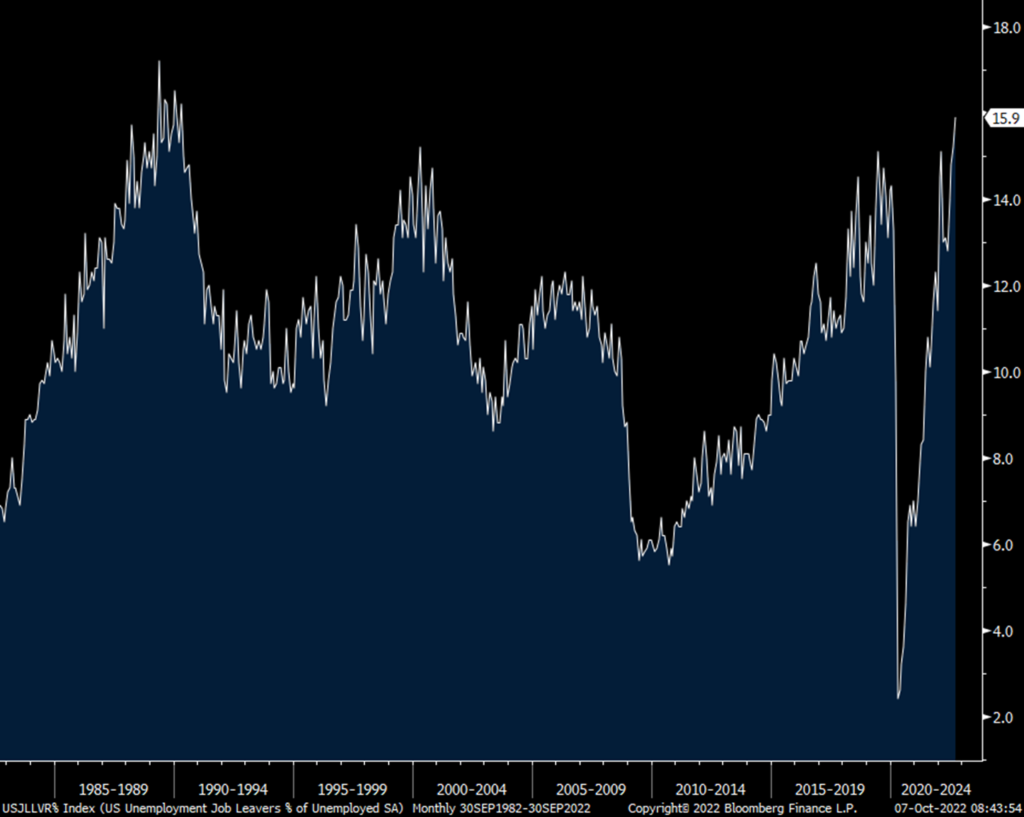
Job leavers as a % of the unemployed rose again to 15.9% from 15.2% in August, 14.8% in July, 14% in June and 12.8% in May. That’s the highest since 1990 and still reflects confidence on the part of quitters that they are going to find a better paying job.
Sector wise, the service sector added 244k, similar to the 240k print in August but a downtick from the 385k seen in July. Leisure and hospitality added 83k jobs vs 31k in August and 89k in July. The goods side added 288k vs 275k in August and 448k in July with construction adding 19k and manufacturing hiring a net 22k.
Bottom line, while the data was about as expected, the drop in the unemployment rate is seemingly what the markets are obsessed with because of what it means for the Fed. This even though job hiring’s have decelerated now for a 2nd month with August and September averaging 289k and I expect this to continue. Because of a big July, the 3 month average job gain was 372k vs the 6 month average 360k and the 12 month average of 474k. As stated, wage gains are no longer accelerating but hanging in there with 5% type gains, still below the rate of inflation however. As for the still low unemployment rate and when combined with the low level of initial jobless claims, the pace of firing’s remains muted and this of course gets the Fed all fired up about continuing with its aggressive rate hikes.
The Fed funds futures are selling off in response and the terminal rate is at around 4.6% by the spring of 2023 even though this data remains highly lagging but we know the Fed loves to focus on lagging data.
Average Hourly Earnings y/o/y

Job Leavers as % of Unemployed
 Peter is the Chief Investment Officer at Bleakley Advisory Group and is a CNBC contributor. Each day The Boock Report provides summaries and commentary on the macro data and news that matter, with analysis of what it all means and how it fits together.